The material you choose decides how long your gate lasts, how much looking after it needs and how it copes with wind, rain and salt air. Here’s how aluminium, steel and timber compare for New Zealand homes, with a few things Jules has learned from more than 20 years in the trade.
Does aluminium rust?
No. Rust is iron oxide, so only iron and steel can rust. When aluminium meets the air, it quickly forms a thin, hard film of aluminium oxide that protects the metal underneath. A fresh surface, such as a scratch, forms a new film the same way (Kloeckner Metals).
That doesn’t make aluminium indestructible. It can corrode where salt and moisture sit on it for long periods, and where it touches a different metal in the wet, such as steel or copper. This is called galvanic corrosion. NZ fastener supplier Anzor explains that it needs three things at once: two different metals, direct contact between them, and moisture such as salt water. Separating the metals, for example with nylon washers, stops it. Good gate design uses compatible fixings and doesn’t leave water sitting in joints.
Aluminium gates
Aluminium is the material Jules works with every day, and these are the reasons:
- it won’t rust, which matters on the coast
- it’s light, at about a third of the density of steel (Kloeckner Metals), so it’s easier on hinges, wheels, posts and gate motors
- it stays straight, so it won’t warp or twist the way timber can
- it’s powder coated in the colour you choose, and needs little upkeep beyond a wash
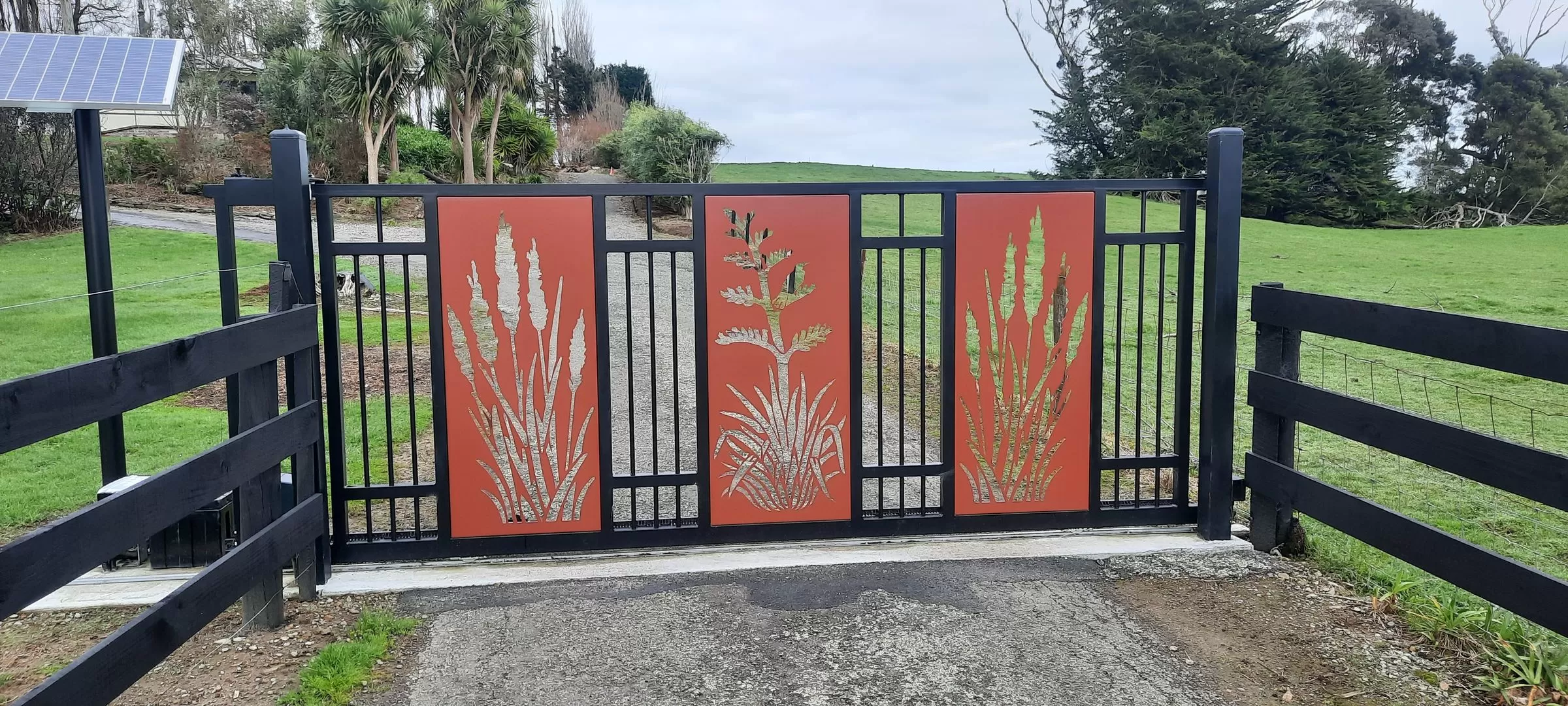
- it can be made in almost any style, from slats and louvres to laser-cut panels and classic farm-gate bracing
How often should you wash it? Dulux’s NZ care guide for powder-coated surfaces recommends cleaning at least every 12 months inland, every six months on sea shores with medium sea spray, and every three months in high spray zones such as surf beaches. Sheltered spots that rain doesn’t reach may need more frequent cleaning, because salt and dirt aren’t washed off (Dulux Powder Coatings). A soft brush, warm water and a mild detergent such as dishwashing liquid does the job.
Steel gates
Steel is strong and stiff, and it’s a common choice for heavy-duty farm and security gates. The catch is rust. Steel needs a protective coating, such as galvanising, paint or powder coat, and any chip or scratch that reaches bare steel can start to rust. That makes coastal sites harder work.
Steel is also heavy. A steel gate needs strong posts and hinges, and it’s more work for an automatic opener.
Timber gates
Timber looks warm and natural, and it’s easy to repair. But it moves with the weather. Over time timber can warp and twist, which affects how a gate hangs and latches, and it needs regular painting or staining to keep rot away.
Timber posts move too. Jules recommends metal posts where existing timber posts are old, loose or out of plumb, because a gate can only hang as well as the posts it’s on.
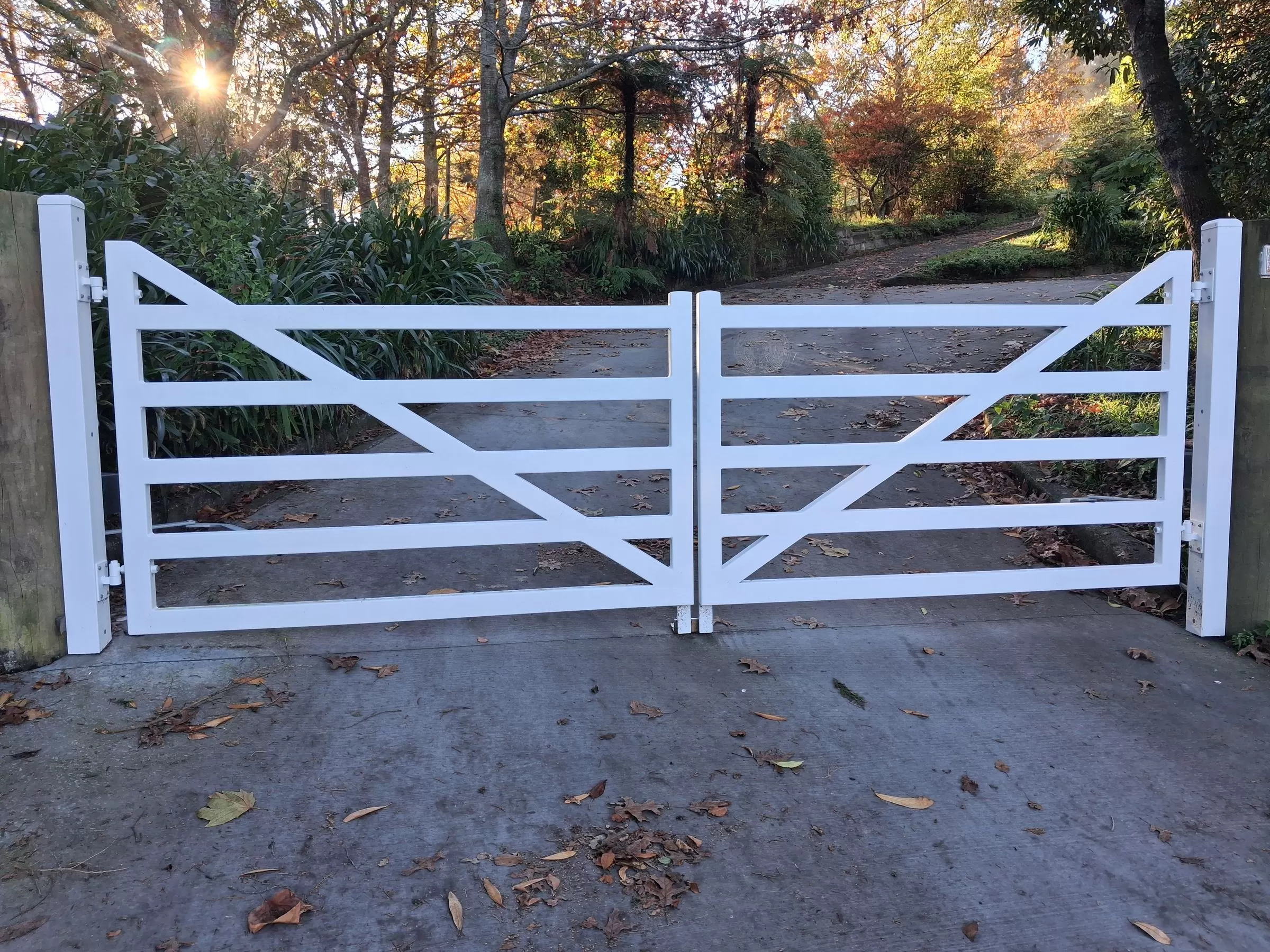
If you love the look of a traditional timber farm gate, it can be made in aluminium instead. Jules builds classic braced rural gates in aluminium that won’t warp, twist or rot. See rural gates.
How the three compare
| Aluminium | Steel | Timber | |
|---|---|---|---|
| Rust | Doesn’t rust | Rusts where the coating is damaged | Doesn’t rust, but can rot |
| Movement | Stays straight | Stays straight | Can warp and twist |
| Weight | About a third of steel | Heaviest | Depends on the timber |
| Upkeep | Regular wash | Wash and touch up chips | Paint or stain, and check for rot |
| Near the coast | Good choice | Needs careful protection | Needs regular care |
Which is best for an automatic gate?
A gate that will be automated needs to be square, rigid and running smoothly, so the opener isn’t fighting it. Aluminium’s light weight is easier on the motor and helps it last. Steel gates can be automated too, but their weight means more load on the opener, the posts and the hinges. See gate automation.
How Jules builds aluminium gates
Jules began his engineering fabrication apprenticeship in 1999 and has been making aluminium gates in Levin since 2006. His gates are made to fit your opening, with square tube frames (usually 40 × 40 × 3 mm or 50 × 50 × 3 mm). He uses a heavier wall thickness than some for a more robust gate, and radiused corners that look better and are nicer to handle. Every gate is powder coated in your colour and comes with a 5-year warranty on workmanship.
See the gates Jules makes or get a free quote.
Sources
- Aluminum oxidation: does aluminum rust?, Kloeckner Metals
- Importance of aluminum density, Kloeckner Metals
- Galvanic corrosion: keep those metals apart!, Anzor
- Care and maintenance of powder coated surfaces, New Zealand, Dulux Powder Coatings (November 2025)